

Whether you're a first time contact lens wearer or a long-time veteran, it never hurts to refresh your knowledge and understanding of CL care.
Remember: Many eye and vision health conditions caused by poor contact lens hygiene and handling do not exhibit symptoms until pain and infection flare up, and can lead to eventual complications or blindness.
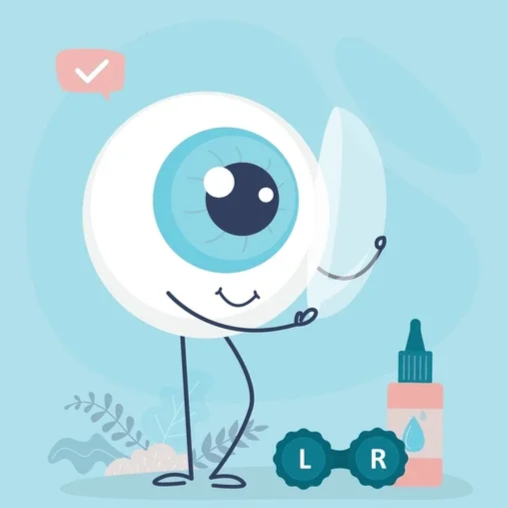
Contact lenses are a medical device!
Just like prescription medication, they must be prescribed and dispensed by a licensed professional — even cosmetic and colored lenses. All our optometrists are licensed by the Ministry of Health's Optometrists & Opticians Board, and trained to detect any negative side effects to your eyes and vision health.
The main causes of contact lens infections are:
Wearing your lenses longer than you've been advised to or beyond their designated usage (for example, using daily lenses for more than one day)
Environmental factors such as smog, haze, and dry air
Poor hygiene
With proper contact lens care, you minimize or even eliminate these causes so your eyes are always fresh, happy, healthy, and pain-free. You only have one precious pair of eyes, so treat them with respect and responsibility!
Regardless of what type of contact lenses you wear, always wash your hands with soap and water, then dry them with a clean, lint-free towel before handling contact lenses.
Minimize your lenses' contact with water, no matter how clean, even when taking a shower at home, and especially in pools and bodies of water. Micro-organisms that can harm your eyes are always present in non-sterilized liquids. Always remove your lenses before going swimming or wear goggles over them; in the latter scenario, remove and discard your lenses after being in a pool or water park (best to use daily lenses).
Single use daily disposable contact lenses are the safest soft lenses, as there is no risk of lingering dirt and unsavoury foreign particles from negligent cleaning and storing, or harmful proteins building up. If you choose non-daily contact lenses, wear and replace them according to the prescribed schedule.
If you use non-daily contact lenses:
They should never be rinsed with or stored in water, whether tap, boiled, or sterile.
Follow the specific contact lens cleaning and storage guidelines from our optometrists. Never use saliva to re-wet them as it is full of bacteria.
Diligently use the "Rub & Rinse" cleaning method with multipurpose solution. Rub each lens, one at a time, with your fingers, then Rinse it with solution before soaking.
Upon wearing, rinse the case with fresh multipurpose solution and leave open to dry.
Keep your contact lens case clean and replace regularly every three months. Lens cases can be a source of contamination and infection - replace if cracked or damage.
To maintain 100% sterility, do not reuse old solution or saline, or transfer them into containers other than their original packaging. Prevent their nozzles from touching any surfaces and keep their caps on tightly.
If you use hair spray, apply it before you wear contact lenses. Put your lenses on before applying make-up so they do not get smeared.
Never wear someone else's contact lenses.
Never sleep without first removing contact lenses.
Wearing contact lenses may cause your eyes to become more sensitive to sunlight. Wear polarised sunglasses with total UV protection to enhance visual comfort.
To keep eyes lubricated, use our recommended preservative-free re-wetting solutions.
If you experience redness, pain, tearing, increased light sensitivity, blurry vision, discharge or swelling:
Remove your contact lenses immediately. Consult us or go directly to an eye doctor, or a hospital Accidents & Emergency department if after hours.
NEVER use decorative contact lenses sold over the counter at accessories shops, costume shops, or online.
The only time you should put something beyond regular eye drops into your eyes is when an optometrist or an eye doctor has prescribed it.